 Scientific
 Philosophical
 Technological
— Achieved by UCLA researchers
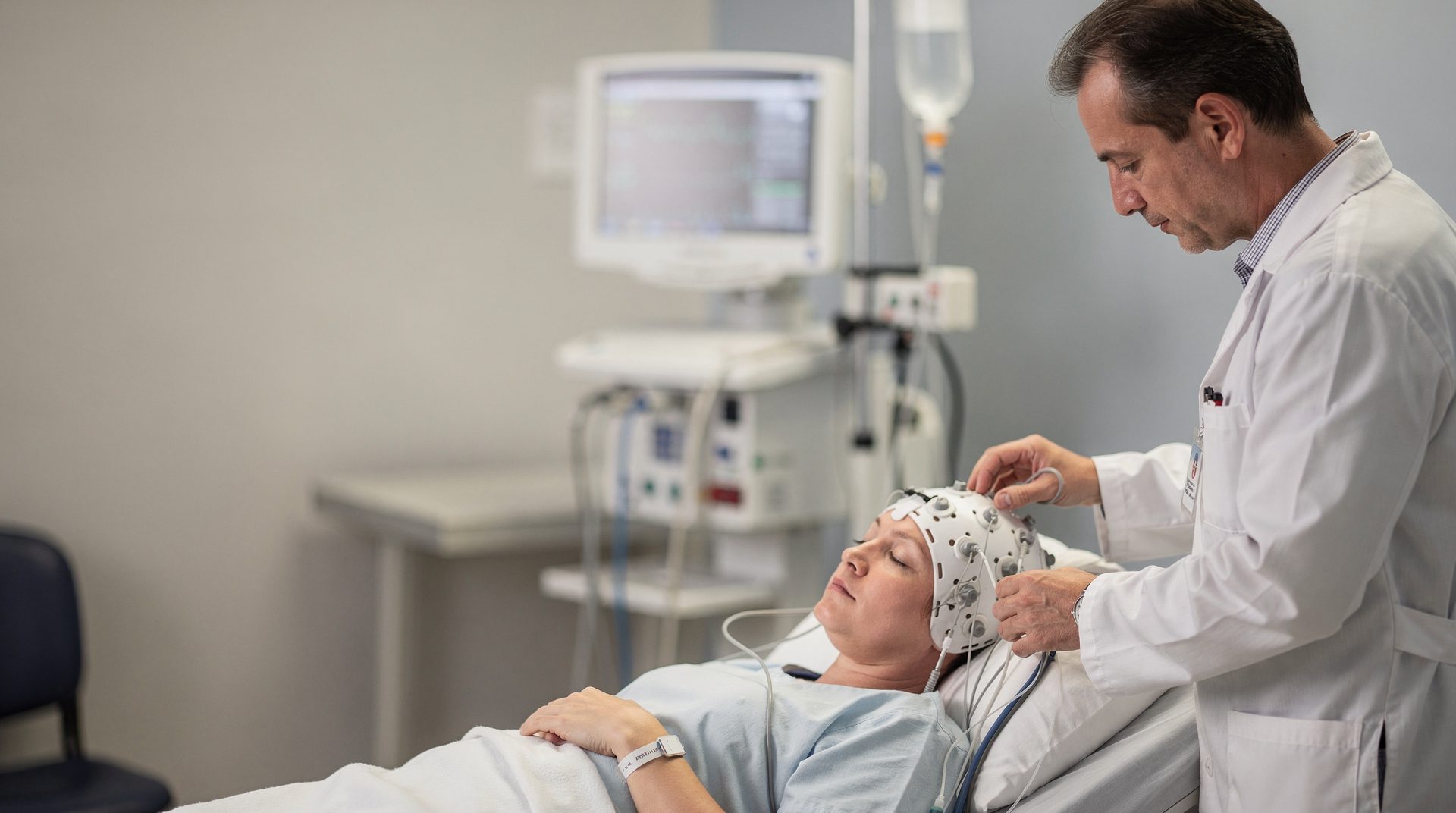
One program realistically simulated the brain to deceive another, thereby exposing hidden neural patterns.Researchers at the University of California, Los Angeles (UCLA) have found that competition between two artificial intelligence agents can help reveal the physiological basis of consciousness. According to Science.org, the new method made it possible to identify subtle brain activity patterns in patients in a coma, in vegetative states, and with other disorders of consciousness.
The Battle of the Black Box and the Glass Brain
For the experiment, the scientists built two neural networks. The first model, a “black box,” was trained to distinguish between conscious and unconscious states. To do this, it was fed 680,000 fragments of electroencephalogram (EEG) recordings from animals and humans. The second model, the “glass brain,” was a biologically realistic simulation of the human brain.
The second model’s task was to adjust the available parameters and generate EEG data capable of fooling the “black box” into taking them for real recordings. Once the simulation successfully deceived the first model, the researchers analyzed which settings made it possible to synthesize convincing EEG patterns of unconsciousness.
Hidden Mechanisms of Coma
The results confirmed most existing hypotheses about how the brain behaves during loss of consciousness, but they also revealed two previously unknown factors. First, the team found a specific role for the external segment of the globus pallidus, a structure within the basal ganglia. They discovered that the weaker the connection between this region and the striatum, the greater the likelihood of entering an unconscious state. This finding was later confirmed by clinical imaging in patients with disorders of consciousness.
Second, the AI showed that in an unconscious state, connections between inhibitory neurons, which restrain the activity of other cells, become stronger. The researchers successfully tested and confirmed this conclusion by examining tissue samples from people who died while in a coma.
Stimulation to Wake Up
After analyzing the parameters, the AI predicted that deep stimulation of the subthalamic nucleus could bring a person out of an unconscious state. Until now, this procedure had not been used in clinical practice to awaken coma patients. The Subthalamic nucleus, located at the junction of the midbrain and diencephalon, is involved in regulating motor activity and may play a role in the mechanisms of consciousness.
According to Science.org, the authors tested the hypothesis using retrospective EEG data from healthy patients who had previously received stimulators to treat neck muscle spasms. After stimulation of the subthalamic nucleus, the neural network recorded a notable increase in their consciousness score. The research team is now preparing clinical trials of the new method in coma patients. The authors believe that a similar algorithmic duel approach could also be effectively used to study depression and other psychiatric disorders. Studies show that stimulation of deep brain structures, such as the thalamus, may help restore consciousness in patients with impaired awareness.
