 Scientific
 Ethical
 Social
— By human standards, they are on the brink of madness
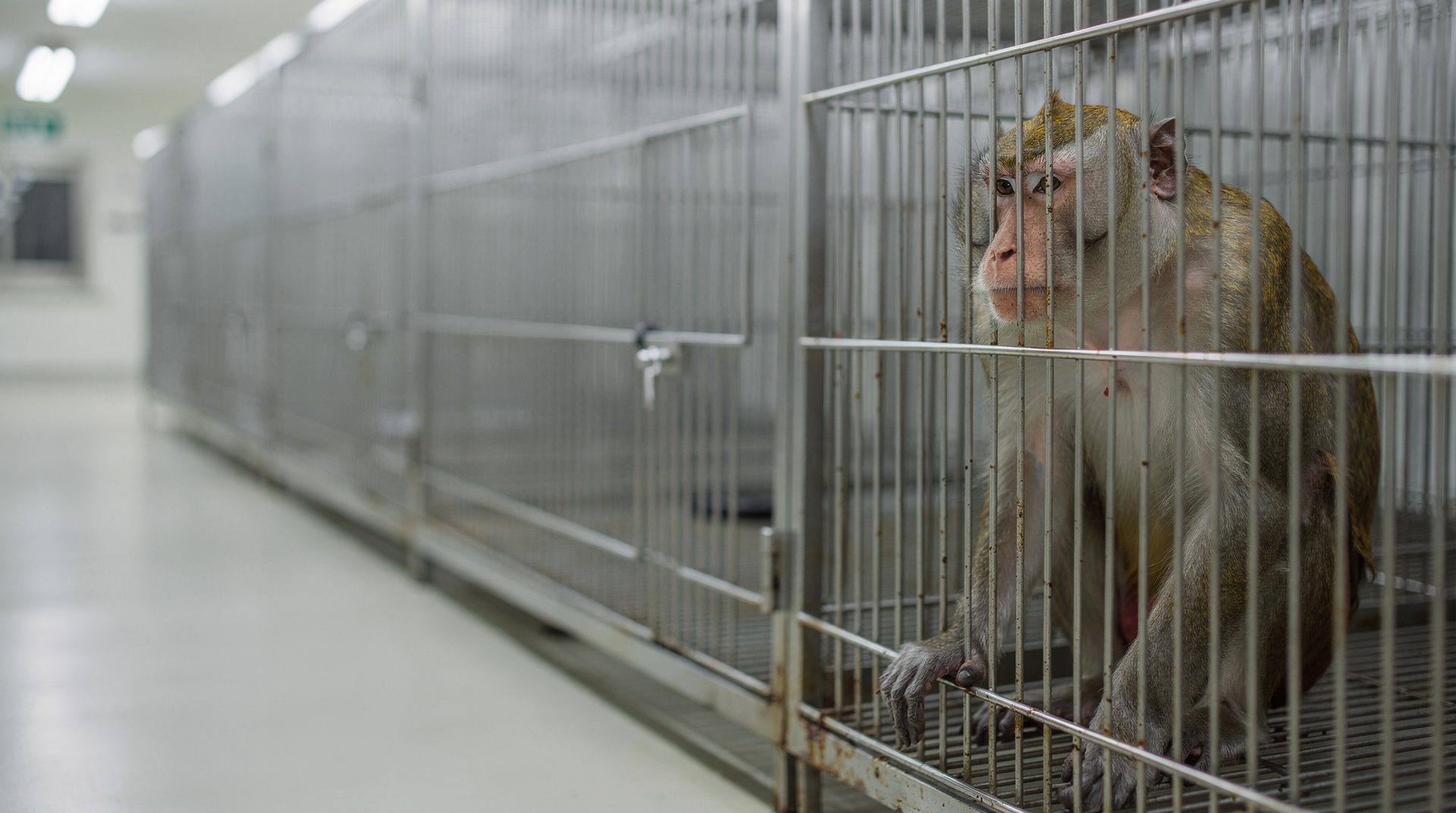
Research on macaques shows that laboratory stress accumulates over years, leading to self-destructive behaviors.Lab monkeys often display unusual and self-destructive behaviors — from pulling out their own fur to endlessly pacing the same path in their cages. These behaviors were once thought to be an acute response to recent stress, such as a painful experiment or sudden isolation. But new evidence shows that these abnormal repetitive behaviors (ARBs) develop over years and are the result of cumulative stress accumulated over the animal’s lifetime.
The Cost of Biomedical Research
Primates play a vital role in biomedicine, helping researchers develop treatments for a range of diseases, including polio and HIV. Yet the conditions they are kept in are far from natural. As reported by Science.org, research animals are often housed in small groups or complete isolation, denied access to the outdoors, and regularly subjected to procedures that cause physical pain and discomfort.
To study how such conditions affect mental health, researchers analyzed the behavior of 240 rhesus macaques born and raised at the National Primate Research Centers in the United States. The scientists compared footage from remote cameras with detailed medical records that tracked every major life event from birth onward.
Cumulative Stress and the Statistics of Deviation
During the study, 12 key stressors were identified, including early maternal loss, isolation, and cages kept in noisy environments. Signs of abnormal behavior were recorded in nearly 60% of the observed macaques. The study by J. P. Garner showed that stress can cause damage to the central nervous system, leading to the development of stereotypic behaviors in rhesus macaques. Read more.
The analysis revealed a clear correlation: the more negative events a macaque experienced, the more likely it was to show abnormal behavior. Each additional stressor increased the likelihood of ARBs by an average of 50%. According to Science.org, different forms of abnormal behavior have different causes. A study by J. P. Garner found that some stereotypic behaviors in rhesus macaques are linked to perseveration and the ability to cope with acute stressors. Read more.
Hair-pulling is more often associated with immediate triggers, such as elevated noise levels, while compulsive rocking and repetitive pacing turned out to be direct consequences of long-term past trauma.
Practical Applications of the Findings
Understanding how psychological trauma develops makes it possible to improve standards for housing laboratory animals. Eliminating single-animal housing and properly zoning facilities could significantly reduce stress levels. In addition, taking an animal’s full life history into account would allow scientists to avoid using in harsh experiments animals whose mental state is already close to collapse.
The findings of this study apply not only to macaques. Abnormal repetitive behavior is seen across many species, from laboratory mice to humans. Adopting new approaches will help make scientific research more humane for the animals involved.
